What is LangChain?
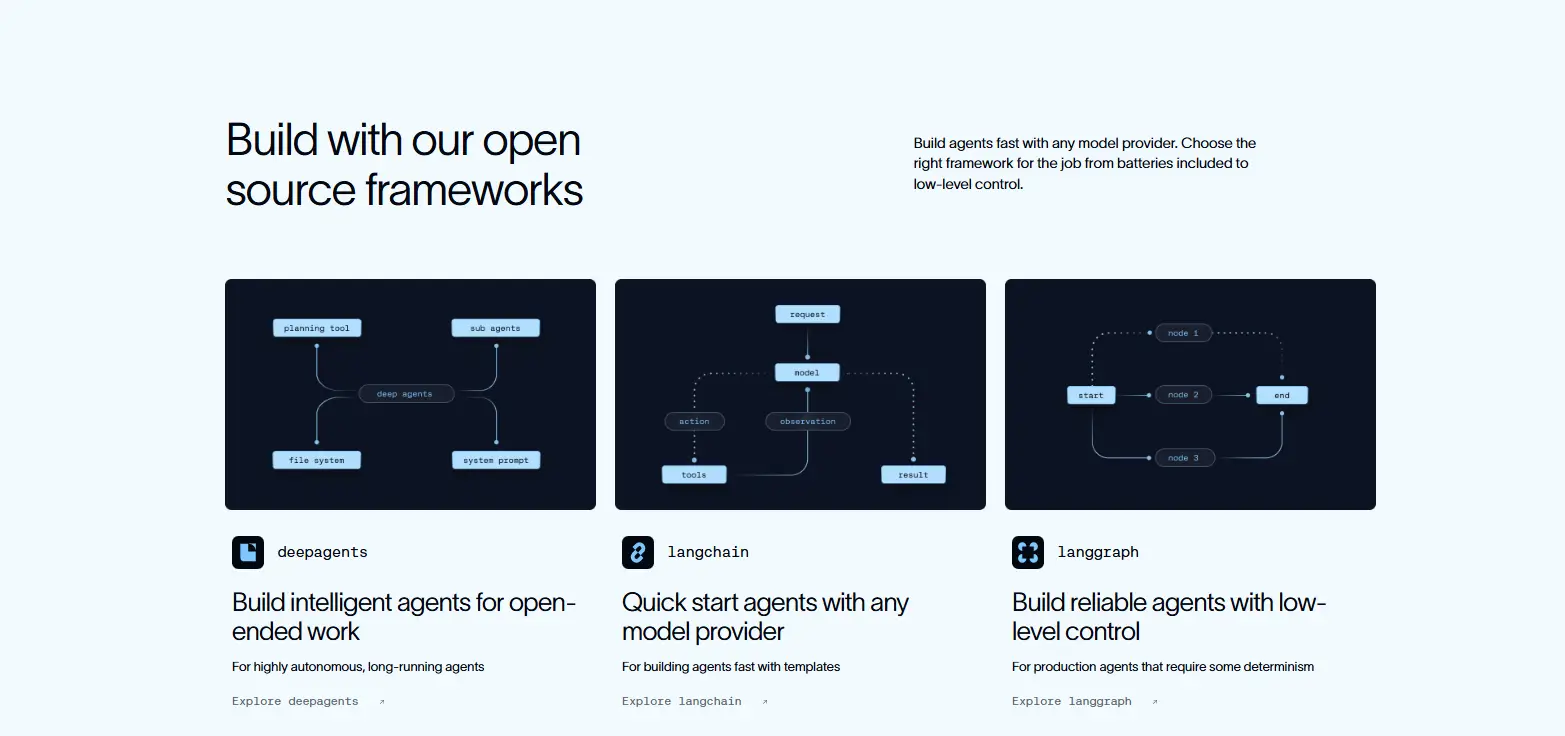
Building AI applications once required deep technical skills and complex coding workflows. LangChain simplifies this process by providing tools that help developers connect language models with data sources, APIs, and workflows. It gives developers the building blocks needed to create advanced AI-powered applications.
The dev and coding tool focuses on making large language models more useful in real-world tasks. Developers use it to create chatbots, automation systems, research tools, and custom AI assistants. Instead of writing everything from scratch, they use ready components that speed up development and improve efficiency.
Specifications
| Category | Details |
| Primary Functions | Framework for building applications powered by language models |
| Key Technology | - Modular architecture
- Prompt management tools
- Memory systems
- API integration engines
|
| Integrations | Works with OpenAI models, Hugging Face, vector databases, APIs, and cloud platforms |
| Special Features | - Prompt chaining
- Memory handling
- Agent tools
- Document processing pipelines
|
| Pricing | Paid model |
| Free Trial | Available |
Key Features
Prompt Chaining System: LangChain allows developers to connect multiple prompts into structured workflows. Each prompt produces an output that becomes the input for the next step. This feature helps create complex AI tasks without manual coordination. Prompt chaining helps developers automate processes such as summarizing documents, generating reports, or answering multi-step questions.
Memory Management: LangChain includes memory systems that allow AI models to remember previous interactions. This improves conversation flow and helps applications provide more accurate responses. Developers use memory features to build chatbots that maintain context during long conversations.
Agent-Based Task Handling: LangChain supports AI agents that perform tasks independently. These agents interact with APIs, tools, and databases to complete actions. For example, an agent can search the web, gather data, and generate a report automatically. This feature makes LangChain suitable for automation-heavy workflows.
Document Processing Pipelines: LangChain allows users to process large documents and datasets efficiently. It splits documents into smaller chunks and organizes information for easier analysis. This feature helps developers build knowledge-based systems such as research assistants and document search tools.
Integration with External Tools: LangChain connects with various APIs and databases. Developers integrate third-party services into their AI workflows without complex coding.This flexibility makes LangChain adaptable to many industries.
Pros
✅ Supports development of advanced AI-powered applications
✅ Provides reusable components that save development time
✅ Works with multiple language models and APIs
✅ Offers flexible customization for different use cases
✅ Enables creation of intelligent workflows and automation
✅ Strong community support and documentation
Cons
❌ Requires programming knowledge to use effectively
❌ Setup process may feel complex for beginners
❌ Debugging multi-step workflows may take time
❌ Performance depends on chosen language models
Who is Using LangChain?
AI Developers: Developers use LangChain to build advanced AI systems such as chatbots, automation tools, and research assistants. It helps them create scalable applications faster.
Data Scientists: Data scientists use LangChain to analyze large datasets and generate insights. The platform simplifies data processing and model integration.
Software Engineers: Engineers rely on LangChain to connect AI models with existing applications. It helps them enhance software features using natural language processing.
Businesses: Organizations use LangChain to create custom AI solutions. These solutions support customer service, data analysis, and workflow automation.
Researchers: Researchers use LangChain to build knowledge retrieval tools. It helps them search large datasets and summarize findings quickly.
Pricing
Free Plan: LangChain provides a free open-source framework. Developers can download and use core features without paying.
Paid Services: Optional paid services provide advanced hosting, monitoring, and performance tools. Businesses use these services for large-scale deployments.
What Makes LangChain Unique?
- Connects language models with real-world data sources
- Supports prompt chaining for structured workflows
- Includes memory systems that improve conversational accuracy
- Uses agent tools that perform tasks automatically
- Processes large documents efficiently
- Works with multiple APIs and vector databases
- Enables scalable AI application development
Rating
| Category | Rating (⭐/5) |
| Ease of Use | 4.2 /5 |
| Cost Efficiency | 4.7 /5 |
| Accuracy and Reliability | 4.6 /5 |
| Performance and Speed | 4.5 /5 |
| Functionality and Features | 4.8 /5 |
| Customization and Flexibility | 4.9 /5 |
| Data Privacy and Security | 4.5 /5 |
| Support and Resources | 4.6 /5 |
| Integration Capabilities | 4.8 /5 |
| Overall Score | 4.6 /5 |
Summary
LangChain gives developers a strong framework for building AI applications that handle complex tasks. It simplifies the process of connecting language models with tools, data sources, and workflows. The platform supports memory, agents, and prompt chaining, which allows developers to create intelligent and responsive systems. While beginners may need time to understand its architecture, experienced developers gain powerful customization options that support advanced automation. LangChain stands as a valuable platform for teams building scalable AI-powered products and tools across industries.
Disclaimer
This review reflects LangChain features available at the time of writing. Always check the official LangChain website for the latest updates before implementing the framework.